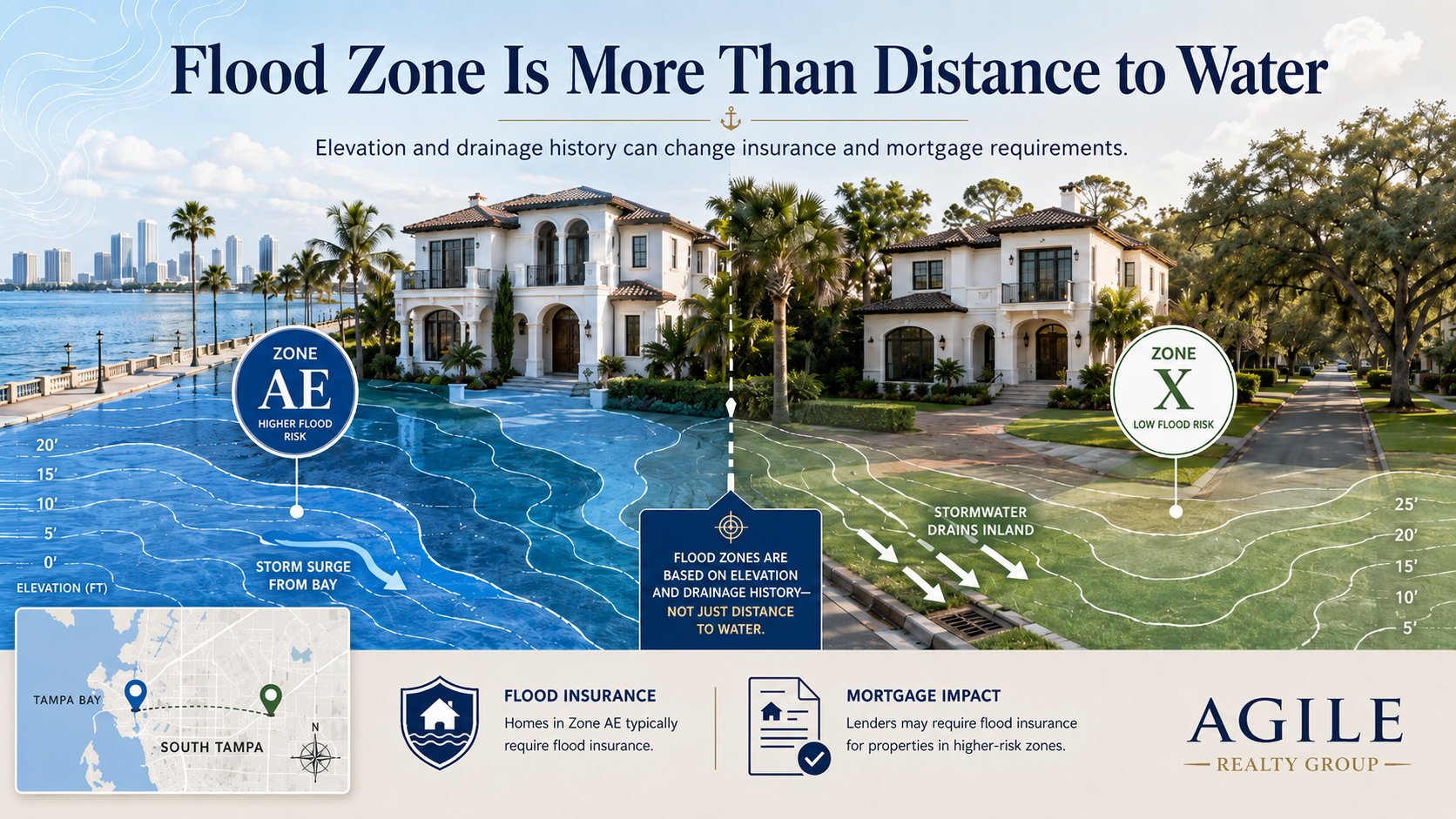
Most Tampa homeowners assume flood zone just means how close you are to water, but it is actually about elevation and drainage history.
Your flood zone designation—whether AE, X, or something else—determines your insurance requirements and your mortgage terms. A home on Bayshore Boulevard and a home three blocks inland on Dakota Avenue can sit in completely different zones, even though they feel like the same neighborhood. That distinction can mean hundreds of dollars in monthly costs that rarely show up in early conversations with sellers or listing agents.
The problem is that many buyers only find out about their zone after they are under contract. Flood insurance in a high-risk AE zone can add substantial costs to your monthly payment, and that number is not always clearly flagged during showings or even initial disclosures. I have seen more than a few closings in Hyde Park get derailed by flood zone surprises that could have been avoided with one early conversation and the right documentation in hand.
An elevation certificate, which a licensed surveyor produces, can sometimes move a property into a lower-risk category and reduce that premium significantly. Some South Tampa homes near Morrison Avenue have saved owners real money this way. FEMA also allows formal appeals called Letters of Map Amendment when a property has been incorrectly classified. If you are touring homes in neighborhoods close to Bayshore or the parks along the waterfront, it is worth asking about the flood zone early so you can budget accurately and avoid last-minute headaches.
If you have questions about flood zones or want to understand what a property's designation really means before you make an offer, let's talk through it. I work with buyers across South Tampa every day, and getting these details right up front makes everything smoother down the road.