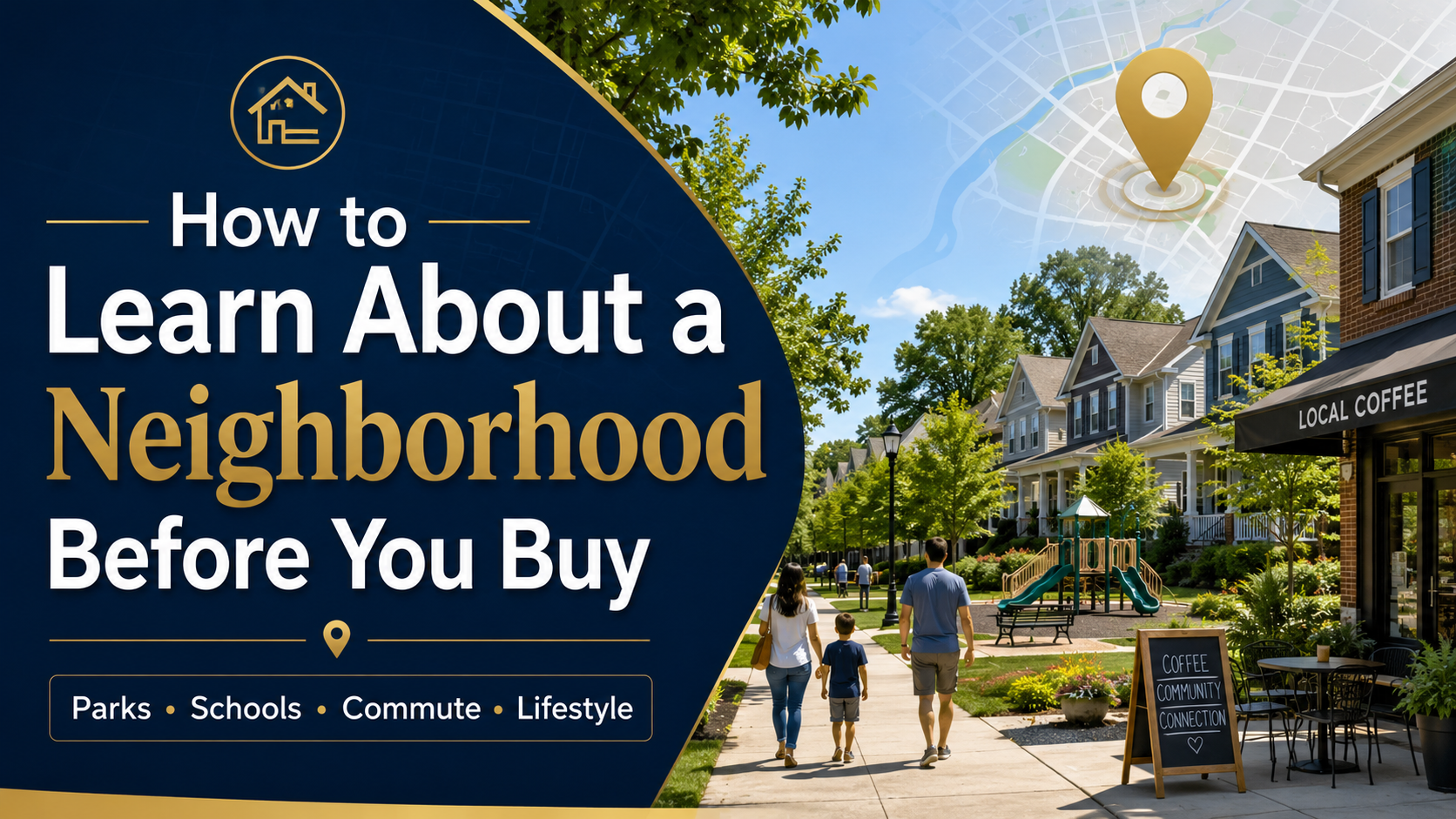
A home can look perfect online, but if the neighborhood does not fit your life, it may not be the right move. Before you buy, take time to learn about the area so you can make a more confident decision.
Visit the Neighborhood at Different Times
One of the best things you can do is drive through the neighborhood at different times of the day.
Go in the morning, afternoon, evening, and on the weekend if possible. A street can feel very different on a Saturday afternoon compared to a weekday morning.
Look at traffic, parking, noise, lighting, how people maintain their homes, and how active the area feels.
Check Your Daily Commute
Before buying, test the drive to work, school, daycare, family, or the places you visit often.
Do not only check the distance. Check the actual drive time during the times you would normally be on the road.
A home may only be a few miles away, but traffic can make a big difference in your daily routine.
Look at Nearby Parks, Restaurants, and Stores
Think about how you actually live.
Are you close to grocery stores, coffee shops, restaurants, gyms, parks, playgrounds, or the water?
For families, having parks and kid-friendly places nearby can make a big difference. For others, being close to restaurants, entertainment, or work may matter more.
"A good neighborhood should fit your lifestyle, not just your budget."
Research Schools and Childcare Options
Even if you do not have kids, schools can still affect resale value and buyer demand.
Look into public schools, private schools, daycares, after-school programs, and nearby activities.
Do your own research and talk to local resources so you understand what options are available.
Look at Recent Sales and Market Activity
A trusted real estate agent can help you understand what homes have recently sold for in the neighborhood.
You want to look at:
- Recent comparable sales
- Homes currently for sale
- How long homes are staying on the market
- Whether prices are moving up, down, or staying steady
- The condition of homes that are selling
This helps you understand if the home is priced fairly and what the neighborhood market looks like.
Pay Attention to Future Growth
Look around the area and ask questions.
- Are there new homes being built?
- Are businesses opening nearby?
- Are roads being improved?
- Are there new developments planned?
- Is the area growing or changing?
Future growth can be a good thing, but it can also bring more traffic, noise, or construction. It is important to understand both sides.
Talk to People Who Know the Area
Local knowledge matters.
Talk to your real estate agent, neighbors, business owners, friends, and people who actually spend time in the area.
Online research is helpful, but it does not always tell the full story. Sometimes the best information comes from people who live and work in the neighborhood every day.
Check Flood Zones, Insurance, and Property Costs
Before buying, make sure you understand the costs beyond the purchase price.
Ask about flood zones, homeowners insurance, property taxes, HOA fees, and any special assessments. In a coastal market like Tampa Bay, this matters even more — you can read more about why in my guide to the things to know before buying in South Tampa.
A home may seem affordable at first, but taxes, insurance, and other monthly costs can change the full picture.
Walk the Neighborhood
If you can, walk the area.
You will notice things you may miss from the car. Look at sidewalks, lighting, traffic, parks, homes, noise, and how comfortable the area feels.
Ask yourself, "Can I see myself living here?" That question matters.
Final Thoughts
Before buying a home, take time to learn the neighborhood.
Look at the home, but also look at the lifestyle around it. Check the commute, schools, parks, restaurants, future growth, insurance, taxes, and recent sales.
The goal is not just to buy a house. The goal is to buy a home in a place that fits your life. If you're exploring the Tampa Bay area, let's connect — I'm happy to walk the neighborhoods with you. You can also browse the rest of the South Tampa real estate blog for more neighborhood guides and honest local perspective.