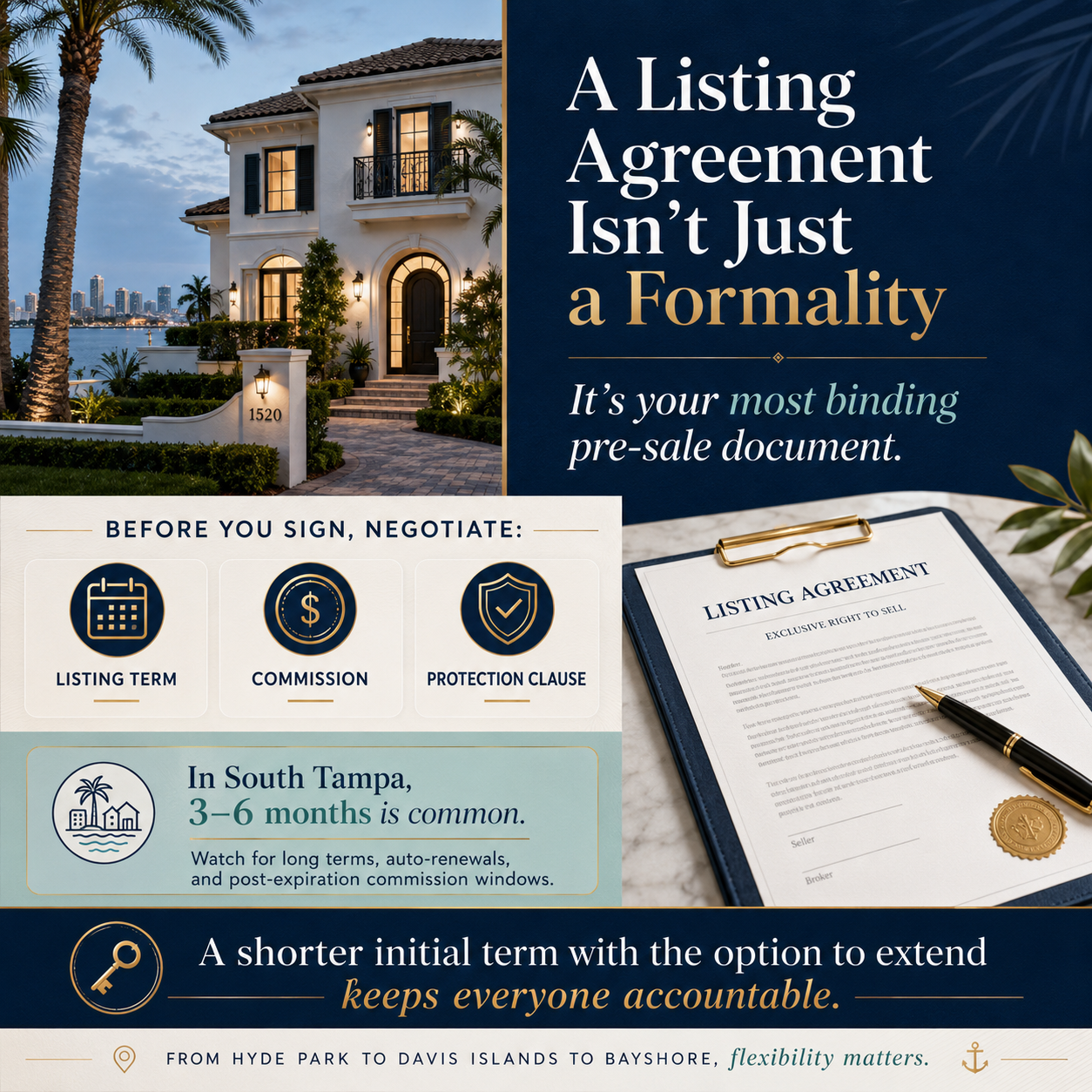
Most sellers sign their listing agreement like they're accepting app terms and conditions, but it's actually the most binding document you'll sign before your house hits the market.
I've watched too many sellers in South Tampa skim through their listing agreement without really understanding what they're committing to. It locks in your commission rate, your listing period, and something called the protection clause, which means if a buyer your agent introduced comes back after the agreement expires, you can still owe a commission. These details matter more than most people realize, especially when you're selling a Hyde Park bungalow or a Davis Islands townhouse.
The length of the agreement is where sellers get caught off guard. A 12-month agreement is a long time if the relationship stops working or the strategy needs to shift. Some agreements even auto-renew without much notice. Standard listing periods in this market run 3 to 6 months, and here's the thing: you can negotiate the term, the commission, and even the protection clause window before you sign. A shorter initial term with the option to extend keeps everyone accountable and gives you flexibility if something changes. If you're thinking about selling your home, it's worth having these conversations upfront.
I've seen well-priced homes on Bayshore sit longer than they should because the seller felt stuck and disengaged from the process. The listing agreement should create alignment, not friction. If you're working with an agent who pushes back on reasonable terms or makes you feel locked in without options, that's a red flag. A good agent wants you to feel confident in the partnership, and that starts with transparency around what you're signing. If you'd like to talk through what a fair listing agreement looks like for your situation, I'm always happy to walk through it with no pressure.