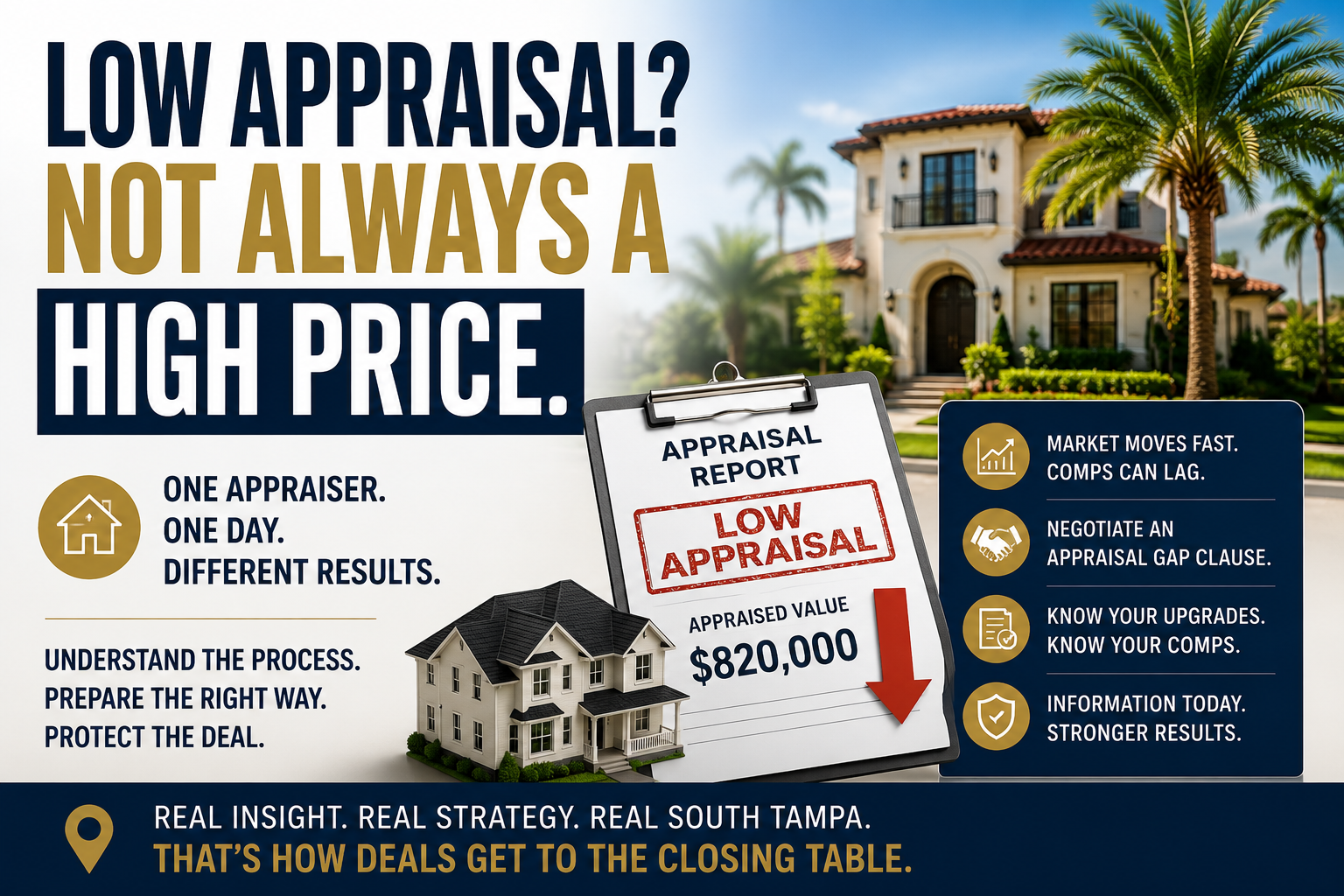
A low appraisal doesn't mean your home is overpriced—it means one appraiser, on one day, used comps that might not reflect what buyers are actually paying right now.
Appraisals establish the value a lender will use to approve a mortgage. The appraiser pulls recent comparable sales, often within a mile and within the last six months. In neighborhoods like Palma Ceia or Virginia Park, where homes sell fast and inventory stays tight, those comps can lag behind real market movement. What feels like a fair price to you and the buyer might not align with what the appraiser's data shows, especially when the market is moving quickly.
The issue comes when a home goes under contract at a strong price and the appraisal comes in lower. Suddenly the buyer can't borrow what they expected, and the deal stalls or falls apart entirely. This happens more often than you'd think, and it's not anyone's fault—it's just the nature of how appraisals work in competitive areas like South Tampa.
Sellers can prepare by keeping records of upgrades and knowing which recent sales support their price. Buyers can negotiate an appraisal gap clause upfront, which defines how the difference gets handled before it becomes a crisis. I've seen deals on Bayshore Boulevard survive low appraisals because both sides understood the process before they reached that moment. If you're buying or selling and want to talk through how to protect your deal, let's connect.