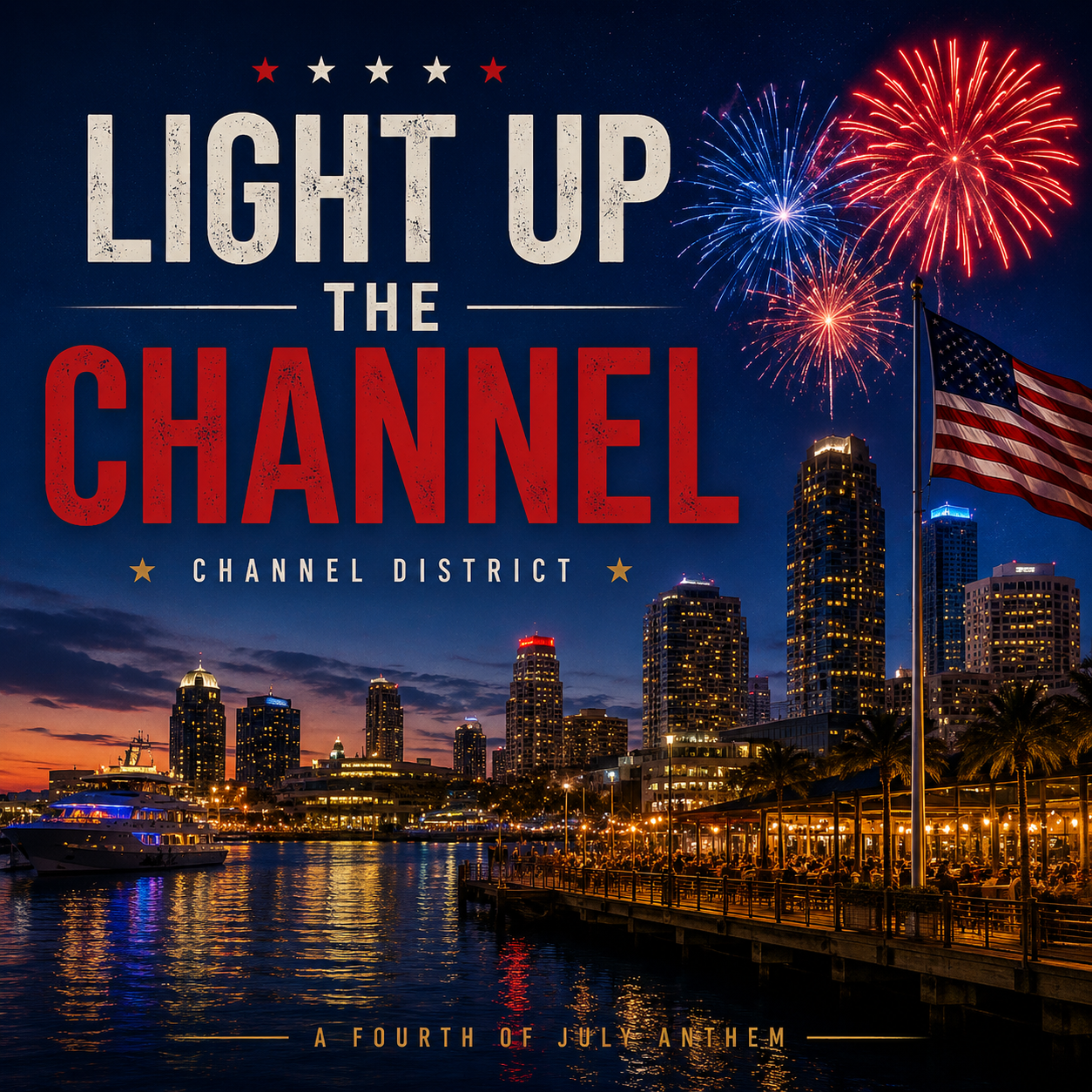
The Channel District is one of Tampa's strongest examples of a neighborhood that never stopped moving. Today, it is known for sleek condo towers, waterfront patios, coffee shops, restaurants, live music, cruise ships, and the energy that comes from living just steps from Downtown Tampa. But long before Sparkman Wharf filled with neighbors and visitors, before the Florida Aquarium became a family landmark, and before the streetcars carried people between Downtown and Ybor City, this was a working waterfront built by labor, trade, immigration, and Tampa pride.
The Channel District did not become special overnight. It earned its character through generations of people who loaded ships, built rail lines, worked in warehouses, raised families, opened businesses, and believed Tampa's waterfront could be more than a place to pass through.
Where Tampa Met the Water
The story begins with the Ybor Channel and Tampa's early port development in the late nineteenth century. Federal dredging efforts helped connect the city's wharves and waterfront to deeper shipping routes, opening the door for Tampa to grow as a serious maritime city. Rail connections, trade with Cuba, phosphate shipments, and the booming cigar industry brought people, opportunity, and movement to the area.
This was not a quiet neighborhood. It was a hardworking district of warehouses, cargo vessels, shipping companies, rail activity, and longshoremen. The Channel District and nearby Ybor City reflected the immigrant spirit that built modern Tampa, with Cuban, Spanish, Italian, Afro-Cuban, and many other families contributing their labor, culture, food, language, and traditions to the city's identity. The water was not just scenery. It was the neighborhood's engine. For decades, ships came in and out, workers filled the docks, and Tampa's connection to the world moved through this very corridor.
A Neighborhood That Survived Change
Like many historic working districts across America, the Channel District faced difficult years when shipping changed. The rise of containerized cargo in the 1970s shifted much of the general cargo business elsewhere, leaving warehouses and docks underused. By the late twentieth century, the neighborhood had experienced disinvestment and blight, even though the bones of a great waterfront community were still there.
But Tampa did not give up on the Channel District. The turnaround began with major waterfront investments, including cruise facilities and the opening of the Florida Aquarium in 1995. Those early efforts helped remind Tampa what had always been true: this neighborhood had location, history, water access, and a spirit that could not be duplicated. Then came new homes, new streetscapes, transit connections, businesses, public spaces, and a renewed belief in urban living. The Towers of Channelside helped set the tone when the twin 30-story residential towers were completed in 2007, followed by more mid-rise and high-rise communities that brought neighbors back to the waterfront.
From Warehouses to Waterfront Weekends
Today, the Channel District is alive in a different way. The industrial past still shapes the neighborhood's personality, especially around the water and the port. You can stand along Channelside Drive, look toward the Ybor Channel, and watch cargo ships, cruise ships, and working vessels move through the same waterfront that helped build Tampa's economy generations ago.
At the same time, the neighborhood has become one of Tampa's most walkable places to gather. Sparkman Wharf transformed the former Channelside Bay Plaza area into a waterfront destination with open-air seating, food vendors, retail, entertainment, and a lawn where people come together under the Tampa sky. The community's modern heartbeat can be felt at Sparkman Wharf, where food, music, and waterfront views meet; at Victory Coffee, a local place to begin the day; at La La's Sports Lounge, bringing game-day energy to Channelside; at Maloney's Local Irish Pub Downtown; at the Florida Aquarium, a Tampa treasure; and along the TECO Streetcar, connecting the Channel District with Downtown Tampa and historic Ybor City.
This is what neighborhood pride looks like: old infrastructure, new ideas, local businesses, waterfront walks, dogs on patios, families at the aquarium, fans heading toward Amalie Arena, and residents who know they are part of something bigger than a skyline.
More Than Towers and Development
It is easy to look at the Channel District and see the new buildings. But the true value of this neighborhood is not only in the towers. It is in the workers who made the port run. It is in the immigrant communities whose labor and culture helped shape Tampa. It is in the old warehouses that remind us this waterfront was built for work before it became a place for weekends. It is in the neighbors who choose to live close together, walk to coffee, ride the streetcar, support local spots, and gather by the water.
The Channel District is proof that Tampa can grow without forgetting where it came from. It honors the grit of the past while creating space for the future.
Proud to Be Channelside
From E Whiting Street to Channelside Drive, from the waterfront near Sparkman Wharf to the streets leading toward Downtown and Ybor, the Channel District carries a special kind of Tampa pride. It is proud of its maritime roots. Proud of its working-class history. Proud of the cultures that built the surrounding city. Proud of its ability to rise after hard times. And proud of the people who continue to make it feel like home.
The Channel District is not simply a new urban neighborhood. It is a waterfront legacy, built by ships, strengthened by workers, revived by vision, and carried forward every day by the people who live, work, and gather here. This Fourth of July, light up the Channel. History strong, community true, Channel District, Tampa shines through. 🇺🇸
83 Degrees Media · ArcGIS StoryMaps · Tampa's Downtown · Wikipedia