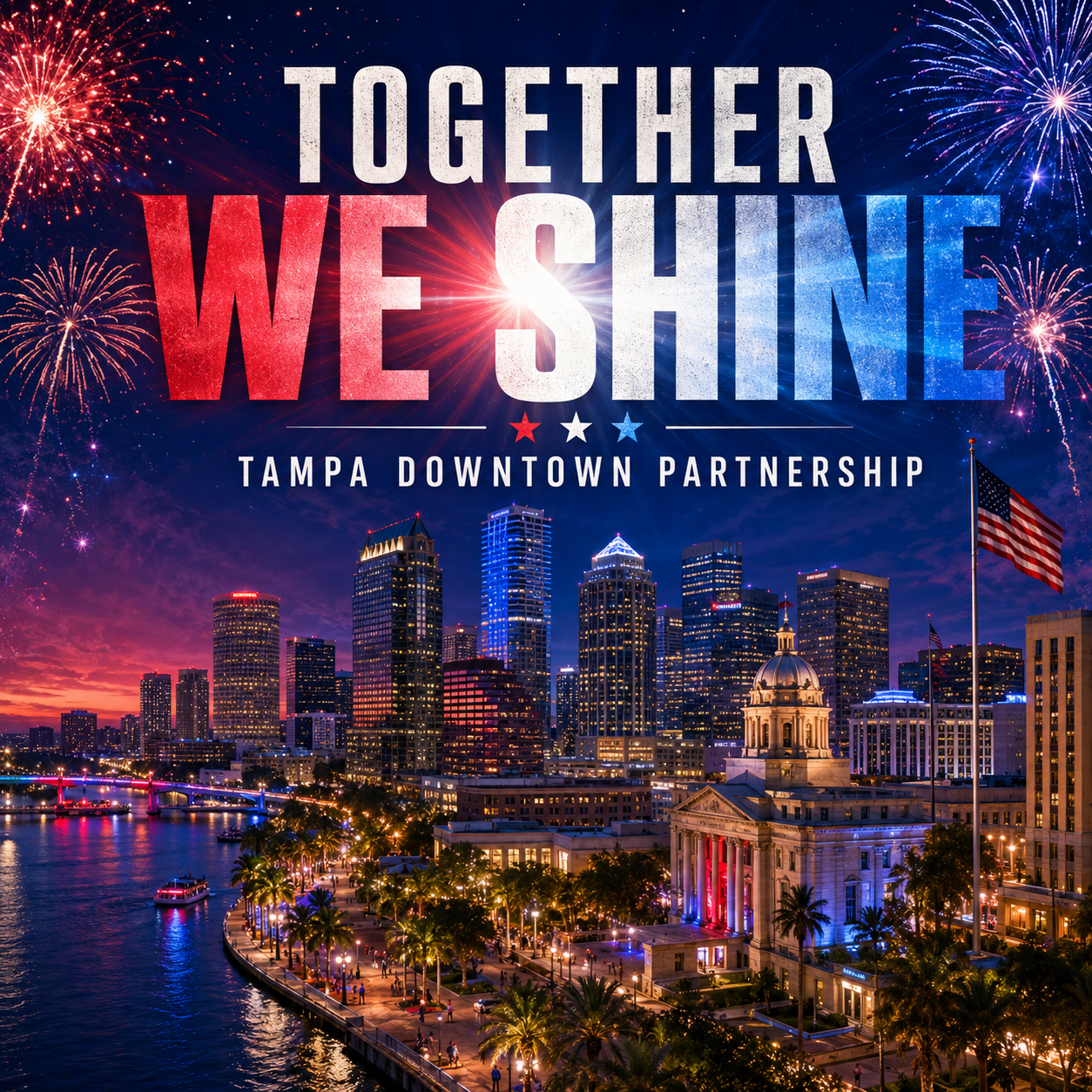
On the Fourth of July, Downtown Tampa does more than light up the sky. It lights up the memory of a city built by waterfront workers, faith communities, entrepreneurs, families, artists, public servants, and neighbors who believed Tampa could keep growing without forgetting where it came from. From the courthouse blocks around Zack Street and Twiggs Street to the waterfront at the Tampa Convention Center, Downtown is a place where history is not tucked away. It is written into the streets.
From Fort Brooke to a Gulf Coast City
Long before today's towers, Riverwalk crowds, Lightning celebrations, and waterfront fireworks, this land was home to Fort Brooke. Established in 1824 at the mouth of the Hillsborough River, the fort helped shape the earliest modern chapter of Tampa. In 1847, John Jackson platted the village of Tampa into blocks, and his 1853 plat is still part of the legal foundation for downtown land descriptions today. That means every Fourth of July celebration downtown is happening on ground that has watched Tampa grow from sandy streets and a military outpost into a major Gulf Coast city.
From Polk Street to Franklin Street, Tampa Built Its Future
Downtown's early growth accelerated when Henry Plant's railroad arrived in December 1883, linking Tampa to Jacksonville and beyond. The rail route ran through the city along what remains Polk Street today. Plant's railroad and steamship connections helped turn Tampa into a growing commercial center, bringing opportunity, new residents, business activity, and a larger vision for the city.
As the years passed, downtown became the place where Tampa handled its banking, legal work, shopping, hotels, government, and big ideas. Franklin Street rose as a major center of commerce. Polk Street carried the energy of rail travel. Twiggs Street, Jackson Street, Zack Street, Marion Street, Nebraska Avenue, and Florida Avenue became part of the daily rhythm of people coming to work, worship, shop, gather, and build a life in the heart of Tampa. You can still feel that rhythm today near the Hillsborough County Courthouse, Joe Chillura Courthouse Square, the Tampa Police Museum, and the Tampa Firefighters Museum on Zack Street, which preserves records and artifacts connected to the people who have protected Tampa through generations of growth and change.
A Downtown Built on Many Stories
Downtown Tampa's story is not one story. It is many stories sharing the same streets. Sacred Heart Catholic Church stands as one of Downtown's most powerful reminders of Tampa's spiritual and immigrant history. The parish traces its origins to 1859, while the current Romanesque Revival church was dedicated in 1905. For more than a century, its towers, stained glass, and presence on Twiggs Street have remained a landmark of faith in a changing city.
A few blocks away, Perry Harvey Sr. Park carries another essential chapter of Tampa history. The park honors Perry Harvey Sr., a labor leader and longtime advocate for Black dockworkers who fought for stronger wages, safer working conditions, and retirement security through International Longshoremen's Association Local 1402. He is also widely associated with the phrase that helped inspire the national Head Start program: children needed "a head start out in life." The park also honors the legacy of Central Avenue and The Scrub, once a thriving Black business, music, and cultural district. The public art, historic timeline, and gathering spaces invite residents and visitors to remember the people whose talent, courage, business ownership, music, and leadership helped shape Tampa. That is what makes Downtown Tampa special: the story is not only in the skyline. It is in the people who made the city move.
The Partnership That Helped Keep the Flame Burning
By the late twentieth century, downtown faced the same challenges seen in city centers across America: suburban expansion, the decline of department stores, lost streetcar service, and competition from shopping malls and office districts outside the urban core. Yet Tampa did not give up on its downtown. In 1986, local business leaders, property owners, developers, and stakeholders came together to form the Tampa Downtown Association. On August 7, 1987, the organization became the Tampa Downtown Partnership, a name that reflected a commitment to work together for Downtown Tampa's future.
Since 1994, the Partnership has administered the Special Services District, helping support a cleaner, safer, more active downtown through initiatives such as the Clean Team, Downtown Ambassadors, advocacy, marketing, mobility efforts, grants, beautification, and public-space activation. The district spans 1,177 acres and is recognized as Florida's longest-operating business improvement district. The Downtown Partnership also played a major role in securing startup funding for the Florida Aquarium and helping assemble land for the downtown arena that Tampa first knew as the Ice Palace. Today, that venue has carried several names, but longtime Tampa residents will always remember the Ice Palace era and the excitement it brought to the waterfront.
From the Riverwalk to the Fireworks
The Tampa Riverwalk is one of the clearest symbols of Downtown's rebirth. Stretching 2.6 miles along the Hillsborough River and into the Garrison Channel, it connects parks, museums, restaurants, gathering places, waterfront views, and some of Tampa's most meaningful civic spaces. The Riverwalk turned the water back into a front porch for the city. It invites families to stroll. It gives runners, cyclists, and visitors a path through Tampa's past and present. It connects the cultural energy of the river to the Convention Center, Water Street, Sparkman Wharf, Curtis Hixon Waterfront Park, and the growing downtown skyline.
The Tampa Convention Center, which opened in 1990, has become one of the city's great waterfront gathering places, hosting conventions, celebrations, community events, and visitors from around the world. And just a few blocks inland, places like Top Shelf Sports Lounge on East Jackson Street keep downtown's everyday energy alive. It is a reminder that a great downtown is not only made by landmarks. It is made by places where friends meet, families celebrate, neighbors watch the game, and people spend time together.
This Fourth of July, Celebrate the City We Share
So when the red, white, and blue rises over Downtown Tampa this Fourth of July, take a moment to look beyond the fireworks. Think about Fort Brooke and the beginning of modern Tampa. Think about John Jackson's street grid. Think about the railroad on Polk Street, the storefronts of old Franklin Street, the courthouse blocks, the church bells at Sacred Heart, the courage and leadership remembered at Perry Harvey Sr. Park, and the waterfront that now brings all of Tampa together.
Think about the families walking the Riverwalk. Think about the workers who kept this city moving. Think about the people who believed downtown was worth protecting, restoring, and celebrating. Downtown Tampa is not just where Tampa goes to work. It is where Tampa remembers. And this Fourth of July, we celebrate a city still rising, one street, one story, one neighbor, and one bright burst of fireworks at a time. 🇺🇸
Tampa Magazine · City of Tampa — Firefighters Museum · Sacred Heart Catholic Church · Tampa Bay 28 (WFTS) · City of Tampa — Perry Harvey Sr. Park · Tampa Downtown Partnership · Visit Tampa Bay — Riverwalk · City of Tampa