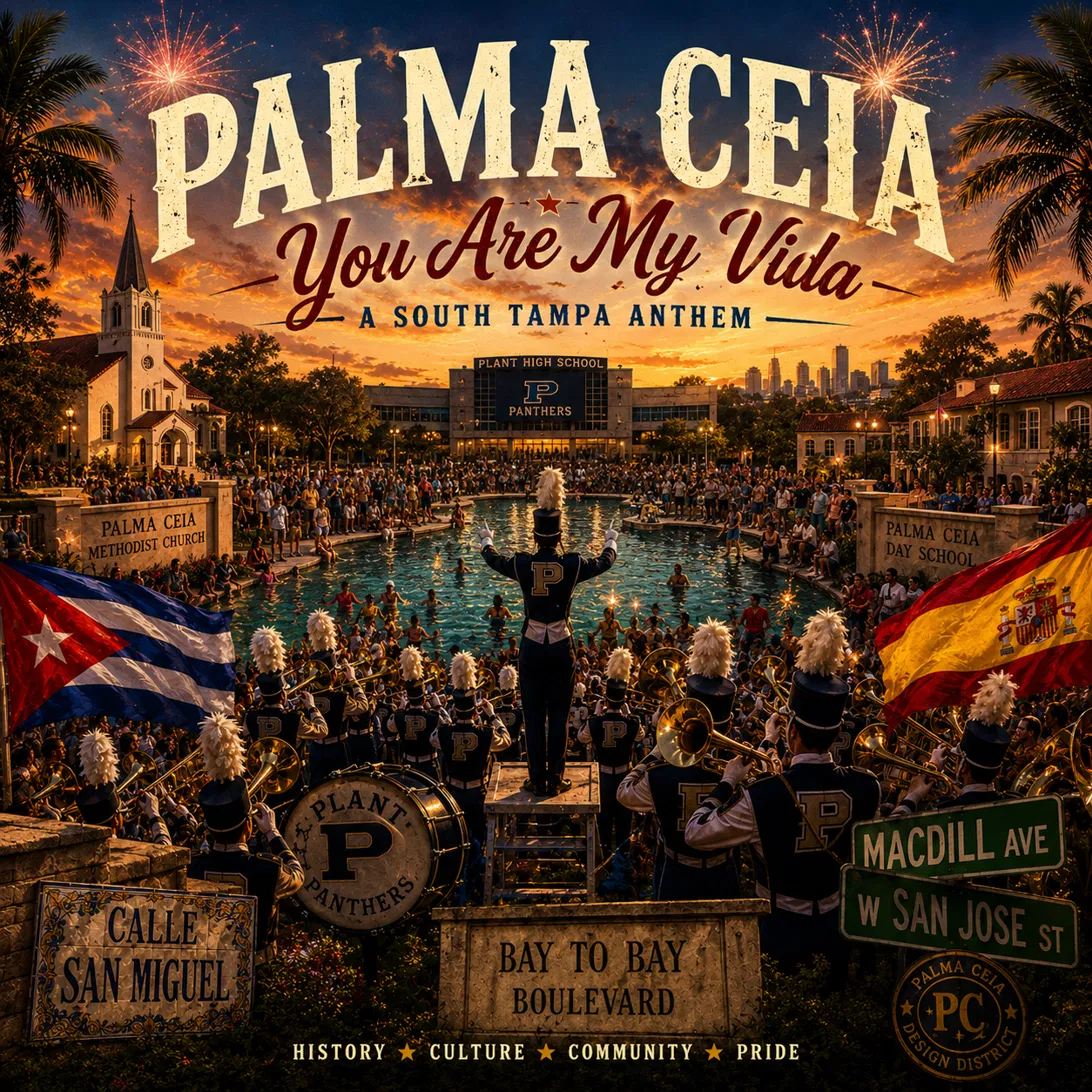
Palma Ceia: Where South Tampa History Still Lives on Every Block
Palma Ceia is one of those South Tampa neighborhoods that feels established the moment you drive through it. The brick streets, mature oak trees, classic homes, Spanish street names, local schools, and nearby Bay to Bay businesses all give it a sense of place that newer neighborhoods cannot replicate.
But Palma Ceia is much more than a beautiful place to live. It is a neighborhood shaped by natural springs, Cuban influence, streetcar-era growth, historic schools, and generations of Tampa families who have continued to call this part of the city home.
Before Palma Ceia Became Palma Ceia
Long before South Tampa filled in with homes, schools, and busy roads, this area was considered far outside the center of Tampa. In the early 1900s, much of what is now Palma Ceia was still open land and pine country.
One of the earliest focal points of the area was Palma Ceia Spring. According to local historians, the spring fed a creek that ran toward Hillsborough Bay. While much of that natural system is no longer visible above ground, the creek still exists beneath parts of Bayshore Boulevard. That hidden spring is a reminder that Palma Ceia's story began with the landscape itself, long before the brick streets and front porches that define the neighborhood today.
The spring is connected to what is now known as Fred Ball Park, a small but meaningful reminder of the area's earlier history. For longtime Tampa families, it represents a time when South Tampa was quieter, less developed, and much closer to nature.
The Meaning Behind the Name
Even the name "Palma Ceia" carries a little mystery.
There is no universally agreed-upon explanation for exactly where the name came from. Some local historians have connected it to developer Thomas Palmer, while others point to the area's older ties to Palma Ceia Springs. A historical article published through the University of South Florida's Sunland Tribune specifically explores the debate around the neighborhood's name, showing that the question has been part of local Tampa history for decades.
What is clear is that Palma Ceia developed during a period when Tampa's Cuban, Spanish, railroad, cigar, and waterfront history were all deeply connected.
Havana Street Names in the Heart of South Tampa
One of the most recognizable parts of Palma Ceia is its street grid.
Drive through the neighborhood and you will see names like San Miguel, San Jose, San Luis, Obispo, Leon, Corona, Sevilla, and Palma. Many of these streets have counterparts in Old Havana, reflecting Tampa's long relationship with Cuba and the cigar industry.
A commonly shared explanation is that Angel Cuesta of Cuesta-Rey cigars showed developer Thomas Palmer a map of Havana while they discussed the area. Whether every detail of that story can be proven today, the neighborhood map itself still carries that Cuban influence more than a century later.
That connection matters because it makes Palma Ceia more than a collection of streets. It is part of Tampa's broader cultural story: a city shaped by immigrants, cigars, commerce, railroads, waterfront life, and families who brought their traditions with them.
Streetcars Helped Build the Neighborhood
Palma Ceia's growth was also connected to transportation.
As development began in South Tampa, streetcar access along Bayshore made it easier for residents to travel between the neighborhood and downtown Tampa. That access helped turn what had once been considered country land into a desirable residential community for families looking to live outside the original downtown core while remaining connected to the city.
Today, it is easy to forget how important that was. Modern South Tampa is built around cars, major corridors, and quick drives to downtown, Westshore, Hyde Park, and the airport. But Palma Ceia grew during a time when a streetcar ride down Bayshore was one of the main ways people connected to the rest of Tampa.
Plant High School and Generations of South Tampa Families
Few institutions are as closely tied to the identity of Palma Ceia as Henry B. Plant High School.
Plant High opened in 1927 and was named after Henry B. Plant, the railroad and hotel magnate whose transportation network helped shape the growth of Tampa and Florida's west coast. The school's original Mediterranean-style building remains in use today and is one of South Tampa's most recognizable architectural landmarks.
For many families, Plant High is more than a school. It is part of the rhythm of growing up in South Tampa. Parents, grandparents, and children often share memories of Panther football games, graduation ceremonies, school traditions, and the sense of pride that comes with being part of a place that has served the community for nearly a century.
That generational connection is one reason Palma Ceia has such a strong neighborhood identity. People do not simply move here for a house. Many move here because they want to be part of a community with roots.
Palma Ceia Methodist: A Community Landmark
Palma Ceia Methodist Church and Day School have also played an important role in the neighborhood for generations.
The church was founded in 1946, with its first Easter service attended by hundreds of people. Over the decades, the church campus at Bay to Bay Boulevard and Dale Mabry Highway has become a familiar gathering place for South Tampa families.
Its Day School has educated young children in South Tampa for more than 60 years, continuing the neighborhood's long tradition of family-centered institutions.
For many parents, Palma Ceia Methodist is one of those places that becomes part of family history. A child attends preschool there, grows up nearby, later goes on to local schools, and eventually returns to the neighborhood as an adult with children of their own.
Palma Ceia Today
Today, Palma Ceia balances its history with the convenience of modern South Tampa living.
The neighborhood remains close to Bayshore Boulevard, Hyde Park, downtown Tampa, Tampa International Airport, MacDill Air Force Base, and many of the city's most recognizable destinations. At the same time, it still feels residential and rooted in neighborhood life.
The Palma Ceia Design District around MacDill Avenue and Bay to Bay Boulevard adds another layer to the community. It is where residents stop for dinner, dessert, pet care, home design, errands, coffee, and everyday life.
Businesses such as Louis Pappas Fresh Greek, BarkSuds, Toffee to Go & More, and Naffco Flooring & Interiors help make the Bay to Bay area feel like more than a commercial corridor. They are part of the daily routine for residents across Palma Ceia, Bayshore Beautiful, Golfview, and the surrounding South Tampa neighborhoods.
Palma Ceia is also home to the Palma Ceia Country Club and sits beside the Golfview community, giving the area a mix of established residential streets, golf-course surroundings, schools, and local businesses that is hard to duplicate elsewhere in Tampa.
Why Palma Ceia Continues to Matter
Palma Ceia has changed over the years, but its character has stayed remarkably consistent.
It is still a neighborhood where people recognize familiar streets, walk to nearby businesses, raise children close to family, and feel connected to South Tampa's past. The homes may have been renovated, the businesses may have changed, and the roads may be busier than they were decades ago, but the neighborhood still carries the same foundation: history, family, community, and pride of place.
From the hidden waters of Palma Ceia Spring to the Havana-inspired street names, from Plant High School to Palma Ceia Methodist, this is a neighborhood where Tampa's past is not tucked away in a museum.
It is still visible every day.
And that is what makes Palma Ceia special.