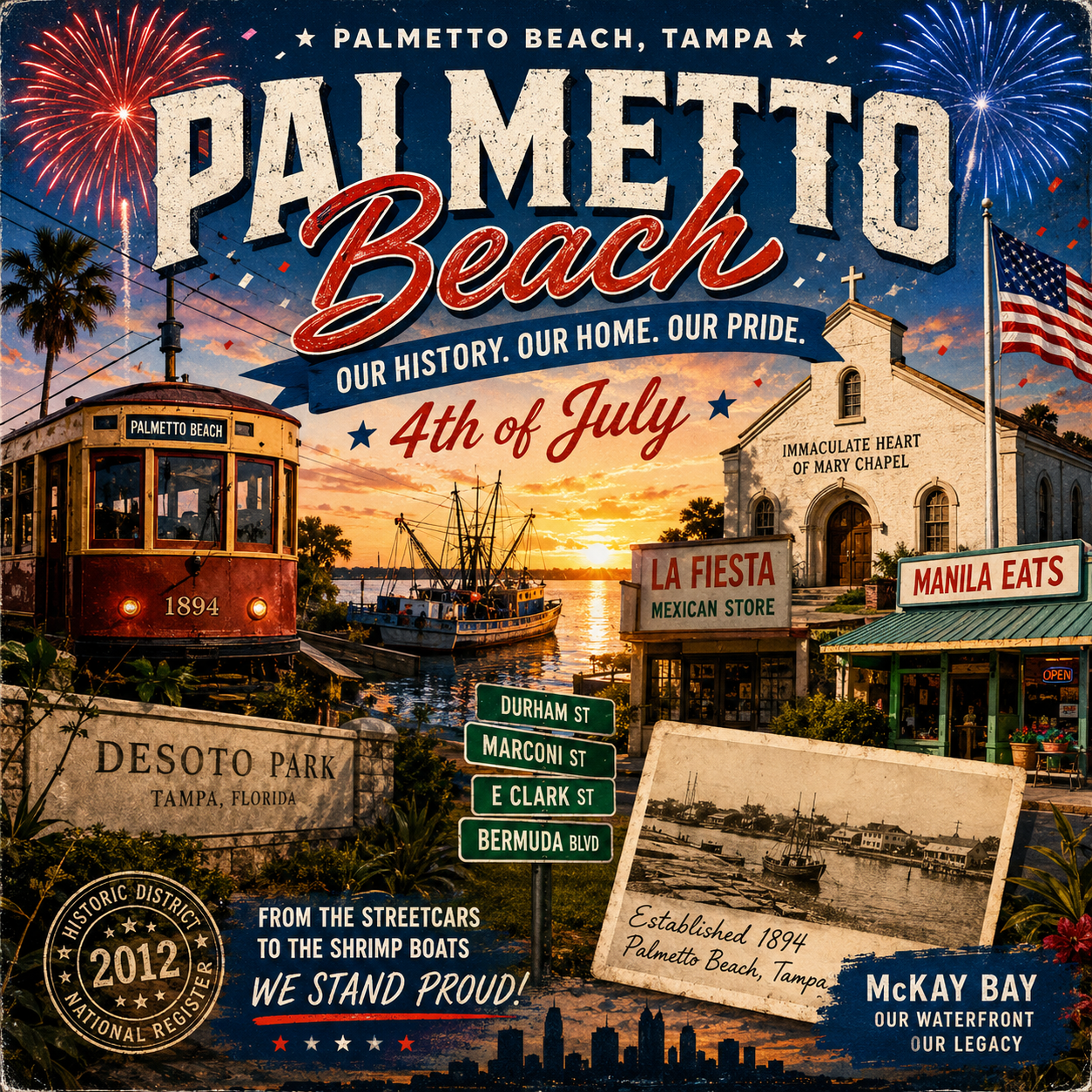
This Fourth of July, we celebrate more than fireworks over the water. We celebrate the neighborhoods that helped build Tampa, one porch, one family, one workplace, and one generation at a time.
Along the shores of McKay Bay, just south of Ybor City, Palmetto Beach has carried that spirit for well over a century. Established in 1894, this historic waterfront neighborhood grew from working-class roots into a close-knit community with a story that still deserves to be told loudly and proudly.
A Waterfront Neighborhood Built for Workers
Before the skyline, before the interstate, before Tampa became the booming city people recognize today, Palmetto Beach was a place where everyday people came to build a life. It appeared on local maps as early as 1889, envisioned as a neighborhood for the immigrant families and workers fueling Tampa's growing cigar industry. When the community was officially platted in 1894, opportunity was already moving down these streets.
Four cigar factories followed, beginning in 1895. Their presence connected Palmetto Beach directly to the cigar-making energy of nearby Ybor City. Workers traveled through the area, families built homes nearby, and the neighborhood became part of the engine that helped make Tampa famous around the world. The electric streetcar line added another layer to that growth. It linked families to jobs, commerce, and the larger city while giving Palmetto Beach its own identity, a hardworking waterfront community where the rhythm of daily life came from factory whistles, streetcars, bay breezes, and the determination of the people who lived here. Palmetto Beach was never just a place on a map. It was a place of movement, labor, culture, and connection.
McKay Bay and the Working Waterfront
McKay Bay has always been central to that story. The water brought opportunity, from the neighborhood's thriving shrimping fleet to the waterfront businesses and working families who depended on the bay. The shoreline was not simply scenery. It was part of the neighborhood's livelihood and identity.
Like every strong Tampa neighborhood, Palmetto Beach has faced its share of challenges. The devastating hurricane of 1921 damaged the waterfront and required the seawall to be rebuilt. But the community did what resilient communities do: it rebuilt. A few years later, the opening of the 22nd Street Causeway created new excitement and ambitious development ideas. Plans for "Tampa Beach" reflected the belief that this area could become a major waterfront destination. The Great Depression slowed those larger dreams, but it did not erase the neighborhood's character or its sense of belonging.
From Commercial Waterfront to Historic District
Over time, Palmetto Beach evolved from a bustling commercial waterfront into a predominantly single-family residential neighborhood. The factories may no longer define every block, but the pride of the people who lived, worked, worshipped, and raised families here remains woven into the streets.
That legacy received national recognition in 2012, when the Palmetto Beach Historic District was added to the National Register of Historic Places. It was a meaningful moment, a reminder that this neighborhood is not just old; it is important. Its homes, streets, shoreline, and community story are part of Tampa's living history.
Culture, Faith, and Gathering Places
Today, Palmetto Beach still reflects the many cultures and families that have made Tampa what it is. Neighborhood staples such as La Fiesta Mexican Store and Manila Eats represent the flavors, traditions, and everyday gathering places that keep a community alive. Immaculate Heart of Mary Chapel continues to stand as a place of faith, reflection, and connection.
And nearby De Soto Park reminds us that Tampa Bay has long been a place where history, water, and community meet. Named for Spanish explorer Hernando de Soto, whose expedition reached the Tampa Bay area in 1539, the park sits near a shoreline that has witnessed centuries of change. But the strongest part of Palmetto Beach is not found in a historic marker, a seawall, or a map. It is found in the people. It is in the neighbors who know one another. It is in the families who have stayed through generations. It is in the homes that have watched Tampa grow around them. It is in the small businesses, the places of worship, the front porches, the parks, and the pride that remains even as the city changes.
A Fourth of July on McKay Bay
This Fourth of July, as red, white, and blue lights reflect across McKay Bay, Palmetto Beach has every reason to celebrate. Celebrate the cigar workers and immigrant families who helped shape the neighborhood. Celebrate the streetcars, shrimp boats, seawalls, and waterfront dreams. Celebrate the resilience that carried this community through storms, economic hardship, and decades of change. Most of all, celebrate the people who continue to call Palmetto Beach home.
From the historic streets near Ybor City to the edge of McKay Bay, Palmetto Beach stands as a reminder that Tampa's story was built by neighborhoods with heart. This Independence Day, let freedom ring across the water. Palmetto Beach, historic, proud, resilient, and still shining. 🇺🇸