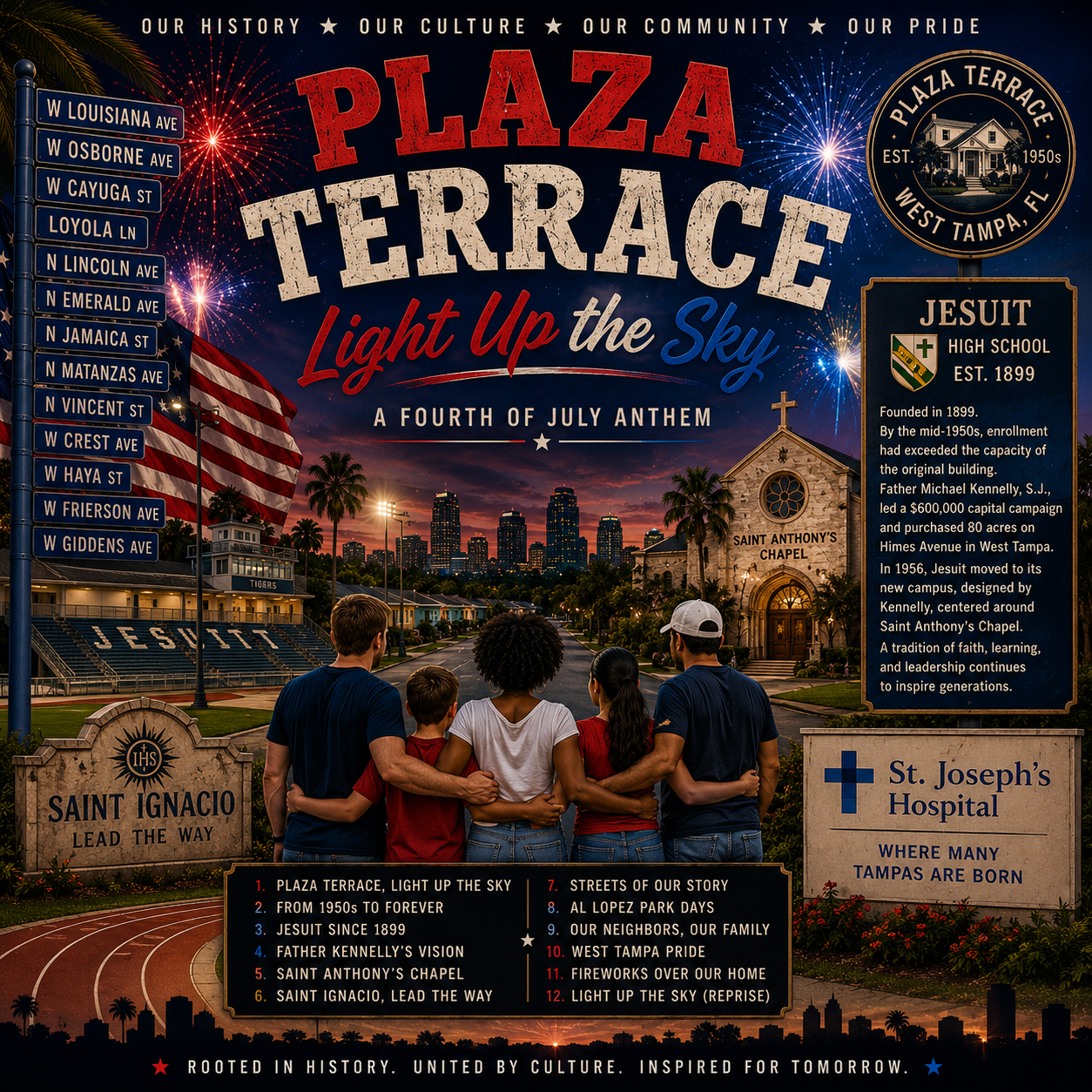
This Fourth of July, we are celebrating the people, homes, culture, and everyday places that make Plaza Terrace one of West Tampa's most recognizable neighborhoods.
The new neighborhood anthem, "Plaza Terrace, Light Up the Sky," is a tribute to the families who built roots here, the Cuban heritage that continues to shape the area, and the streets, schools, parks, and local businesses that bring the community together. Plaza Terrace is not just a collection of homes near major Tampa roads. It is a neighborhood with a distinct style, a strong cultural identity, and generations of stories behind every block.
A Neighborhood Built for a Growing Tampa
Plaza Terrace developed primarily during Tampa's post-World War II growth in the 1950s and 1960s. As families looked for places to put down roots, this part of West Tampa grew with practical, comfortable homes built for everyday life. Many homes in the neighborhood are classic one-story ranch designs, often built on concrete slabs and finished with brick, limestone, or stucco. Their bright, beachy colors and mid-century character remain part of what gives Plaza Terrace its personality today.
These were homes designed for families: front yards, driveways, open living spaces, and blocks where neighbors could know one another. From the beginning, Plaza Terrace was about building a life in Tampa.
Streets That Hold the Neighborhood Together
A neighborhood's identity is often found in the streets people travel every day. In Plaza Terrace, West Louisiana Avenue, West Osborne Avenue, West Cayuga Street, Loyola Lane, North Lincoln Avenue, North Emerald Avenue, North Jamaica Street, North Matanzas Avenue, and North Vincent Street all carry the rhythm of daily neighborhood life.
These are the roads where children head to school, families return home from work, neighbors walk dogs, and generations have created memories together. Nearby streets such as West Crest Avenue, West Haya Street, West Frierson Avenue, and West Giddens Avenue connect Plaza Terrace to the larger history and energy of West Tampa. The neighborhood may have grown in the mid-century era, but its sense of connection still feels timeless.
Cuban Culture and West Tampa Roots
Plaza Terrace reflects the lasting influence of Cuban culture in West Tampa. The neighborhood grew after the cigar-city era had already established West Tampa as a place shaped by Cuban families, Spanish families, immigrant workers, small businesses, food, music, faith, and community pride. That cultural foundation is still present today in the way neighbors gather, the flavors found nearby, and the strong family-centered spirit of the area.
This is a neighborhood where the past is not forgotten. It is carried forward through traditions, stories, meals, celebrations, and the pride residents have in calling this part of Tampa home.
Parks, Schools, and Places That Matter
One of Plaza Terrace's greatest advantages is how close it is to places that serve families every day. Al Lopez Park sits along the neighborhood's western side and offers a major outdoor escape for residents. With trails, green space, fishing access, a dog park, and recreation opportunities, it gives families a place to walk, play, gather, and enjoy Tampa's outdoors.
The neighborhood is also near Jesuit High School, where generations of students and families have gathered around academics, athletics, and school pride. The nearby baseball fields are another reminder of how deeply sports and community are tied together in this part of Tampa. Saint Joseph's Hospital holds a special place in the story of countless Tampa families. For many residents, it is where new chapters begin, where loved ones are cared for, and where generations of Tampa memories are connected.
Local Flavor, Local Pride
Plaza Terrace is surrounded by places that make daily life easier and more enjoyable. At Mr. Empanada, residents can grab empanadas, Cuban sandwiches, and familiar flavors that reflect the neighborhood's Latin roots. At Adriana's Mexican Bar & Grill, tacos, margaritas, and lively gatherings bring another layer of flavor and energy to the area.
For groceries and everyday essentials, Fresco y Más and Publix at Hillsboro Plaza help keep neighborhood life moving. These are the places where quick errands turn into familiar conversations and where families stop on the way home before dinner. That is what makes local businesses important. They are not only places to shop or eat. They become part of the routine, the memories, and the feeling of home.
A Song for the Fourth of July
"Plaza Terrace, Light Up the Sky" was created as a Fourth of July anthem for the neighborhood. It celebrates the ranch homes built during Tampa's postwar expansion. It celebrates the streets where neighbors have raised families for decades. It celebrates Cuban heritage, the schools and parks nearby, and the local businesses that keep community life connected. Most of all, it celebrates the people.
On the Fourth of July, when the flags come out and the fireworks begin, Plaza Terrace has every reason to sing loud: Plaza Terrace, light up the sky. From Louisiana to Osborne, we rise with neighborhood pride. From the homes of the fifties to tomorrow's dreams, Plaza Terrace is family. 🇺🇸